
Landscape visioning in Antarr
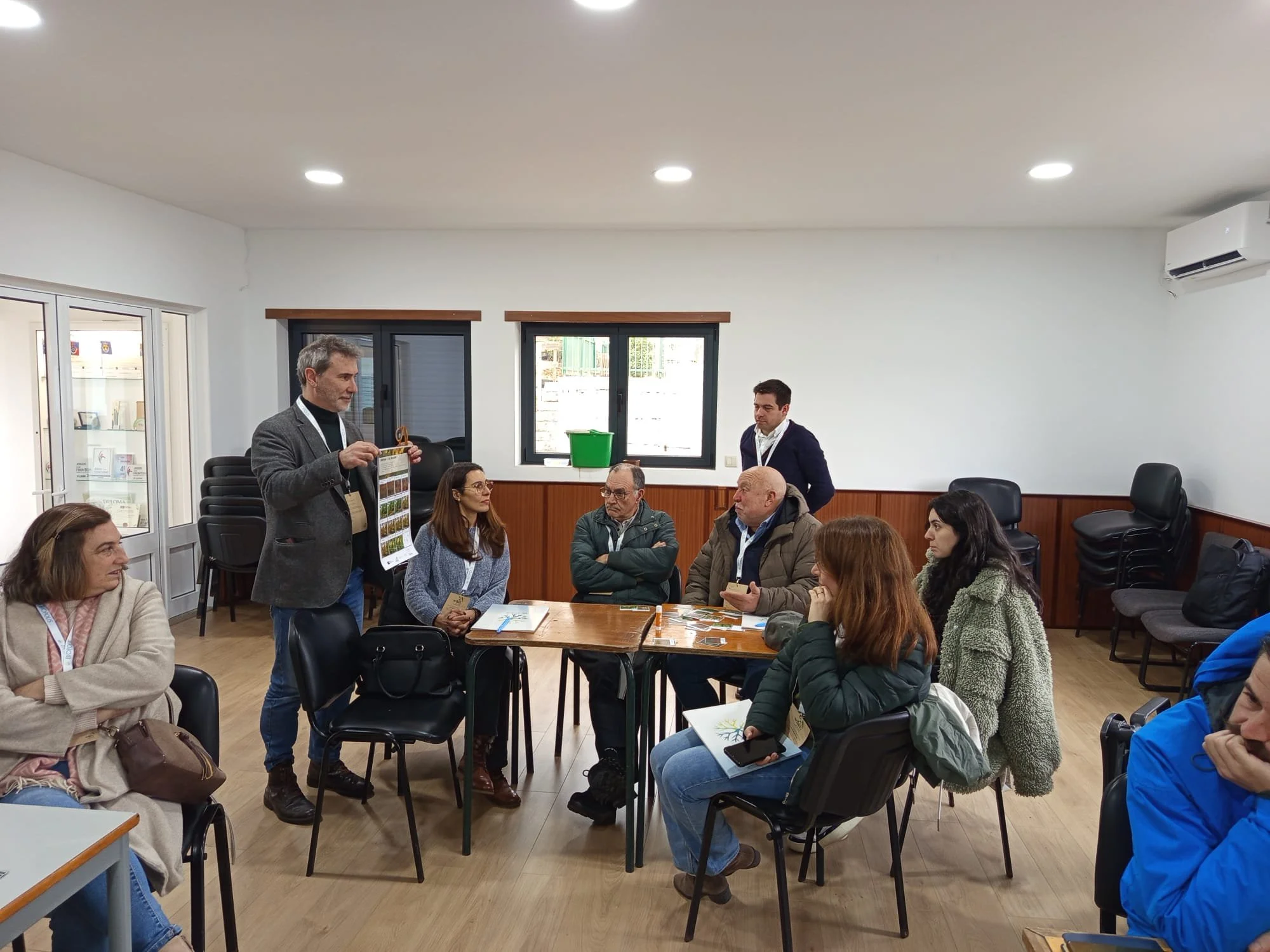
In December 2025 the BIOPOLIS team returned to Antarr for a second workshop centred on the Antarr case study. The purpose of the workshop was to consider future land management visions for the local landscape using the results from the previous workshop that had taken place in June 2025. BIOPOLIS and the Antarr case study team facilitated the sessions, guiding the participants though the exercises.
The Antarr case study area addresses the management of common lands (‘baldios’) in central and northern Portugal. The area was leased by a company to develop an 80-year adaptive management plan for the local landscape. The purpose of the plan is to enable forest production and optimise nature-based solutions, while conserving natural, social and cultural values.
The workshop was attended by 26 stakeholders with understanding of, and interest in, the local landscape. Stakeholders represented a range of interests including wood production, land management, beekeeping, local communities involved in managing the common land and NGOs. This provided a diverse range of perspectives which enabled an in depth discussion and an interesting workshop.
This workshop developed from the previous workshop that had identified a landscape vision to balance land uses with nature based solutions. The landscape vision that had been developed in the first workshop was used as the basis for a further landscape modelling session in this second workshop. During this second workshop stakeholders considered the previously developed landscape model and made changes based on their perspectives and preferences, and assessment results which were provided during the workshop.
Overall the groups chose to reduce the amount of native forest and increase sparse shrubland and pasture, riparian forest, pine and eucalyptus plantations from those defined in the first workshop vision.
Using the results
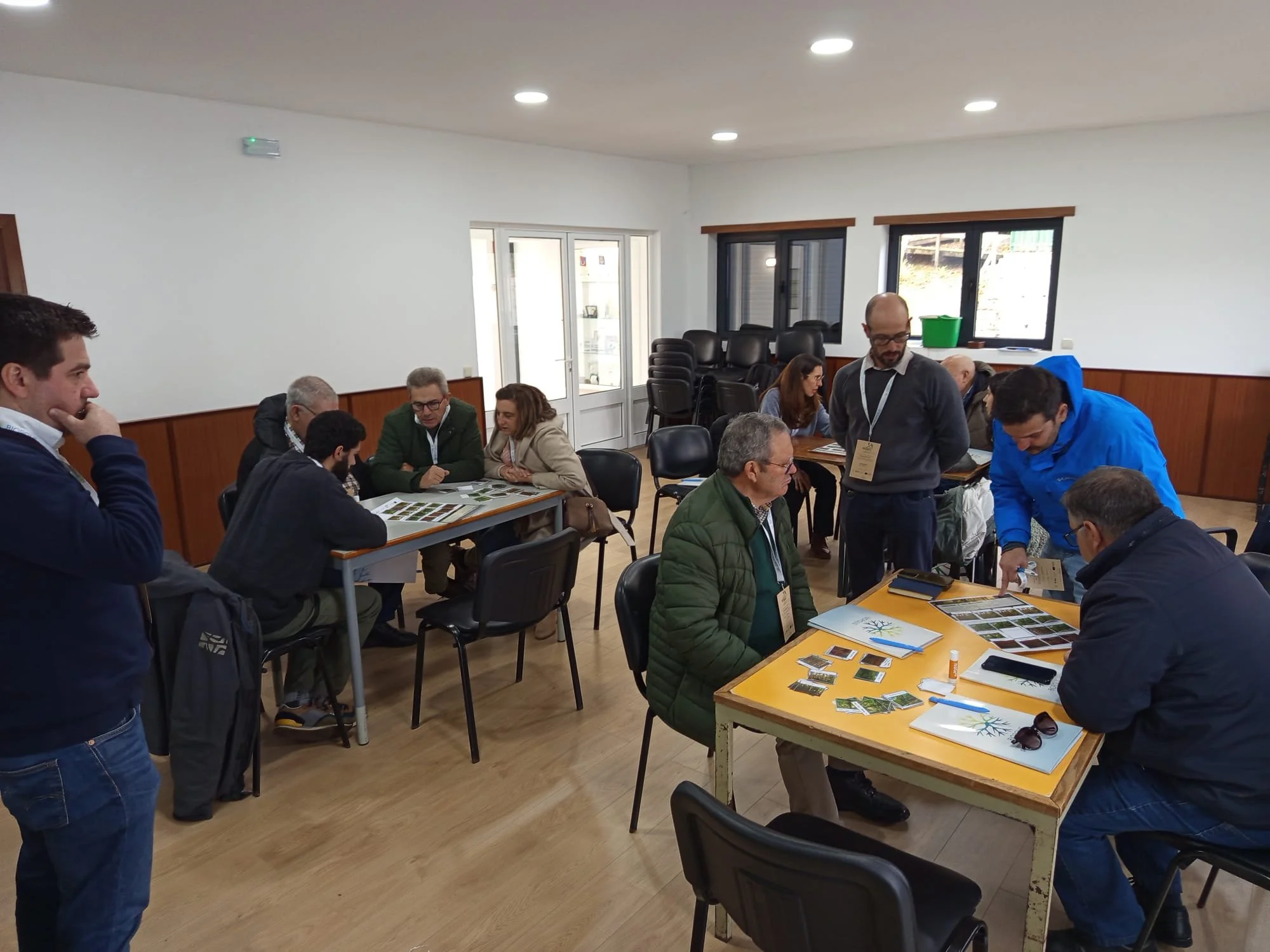
The landscape models created by the workshop participants will be a vital resource for the research team to understand how different models would be perceived by different stakeholders locally. Comparing the models from the workshop against models created by the research team will help to identify how the nature based solutions of biodiversity, fire risk mitigation, economic benefits, and carbon storage can be maximised whilst still supporting local values and communities.
Locally, the workshop results enabled the case study team in Antarr to gain a detailed insight into local perceptions, This understanding can be used to adapt and enhance the long term management plans for the area meaning that the approach ‘on the ground’ will meet the needs of a range of stakeholders whilst supporting biodiversity.
The stakeholders who participated in the workshop gained an understanding of local landscape priorities through workshop presentations and knowledge exchange with others. Working collaboratively helps to develop long lasting relationships and understanding which in turn benefits the local landscape by fostering communication and breaking barriers. This helps to sustain a positive approach to managing the common lands into the future.