
Local communities in Portugal reflect on the future of their region’s landscape
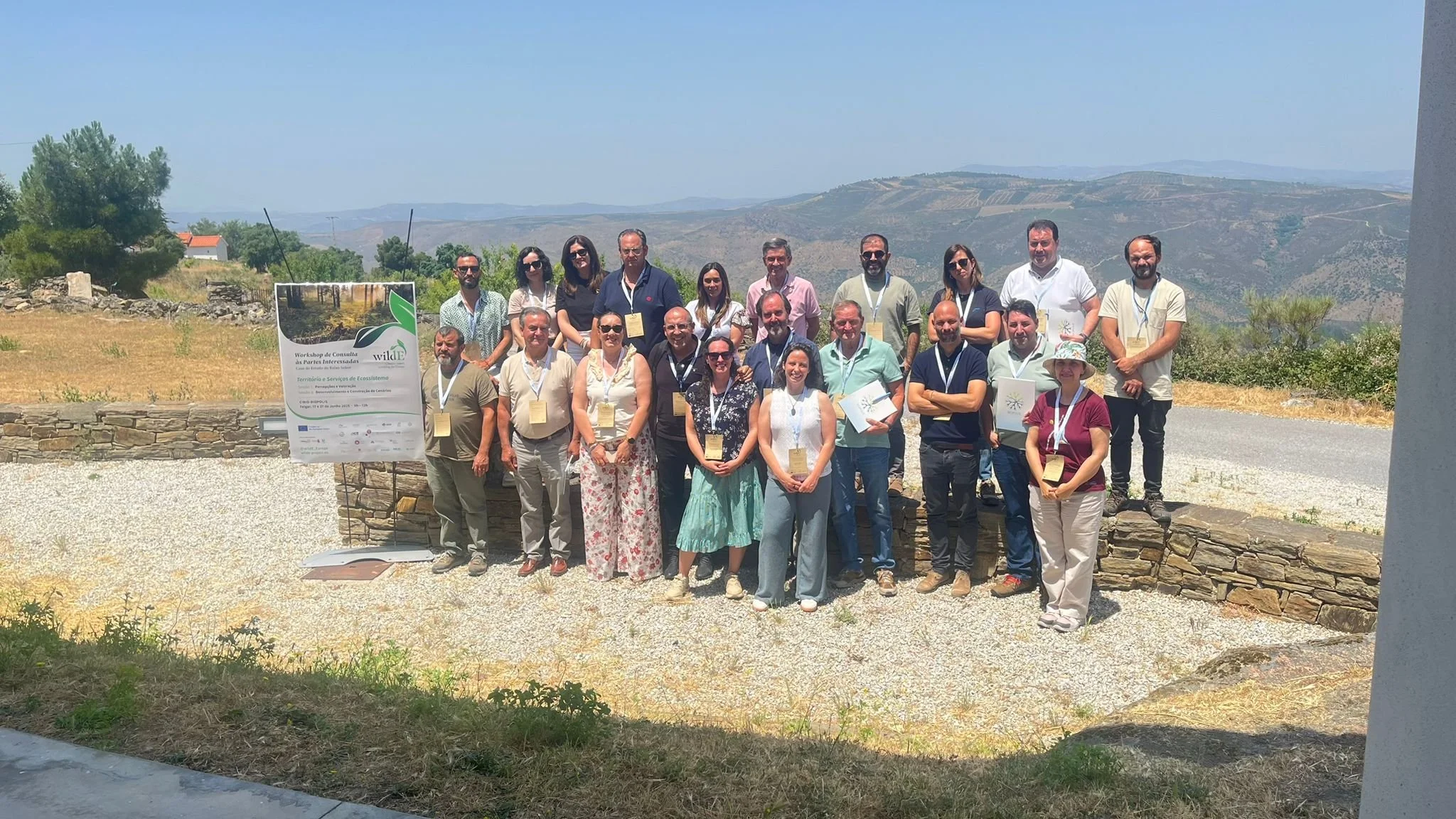
Workshop participants in Baxio Sabor
In June 2025, the wildE Baixo Sabor case study team from BIOPOLIS-CIBIO held two workshops to engage local stakeholders. By reflecting on the future of land use, ecosystem services and sustainable management of the region’s landscape, our team of researchers worked with the participants to understand diverse perspectives and identify both opportunities and challenges that may guide climate-smart rewilding and sustainable land use strategies in the region.
Local actors join researchers for a series of workshops
Taking place in Torre de Moncorvo in northeastern Portugal, the workshops brought together 30 stakeholders representing a wide range of groups with a strong presence in the region. Land users including beekeepers, hunters, livestock, the fishing community and forestry producers, along with NGOs, academics, Biosphere Reserve representatives, private companies, and central and local public administrations participated in the first workshop, which focused on understanding perspectives and valuations of rewilding. The workshop captured vital local knowledge around land-use changes, ecosystem services, wildfires, and wildlife.
Building on this discussion, key local actors attended the second workshop to develop a shared vision for the area. Participants explored alternative scenarios and assessed their ecological, social and economic implications in small groups.
Mutual benefits for researchers and participants
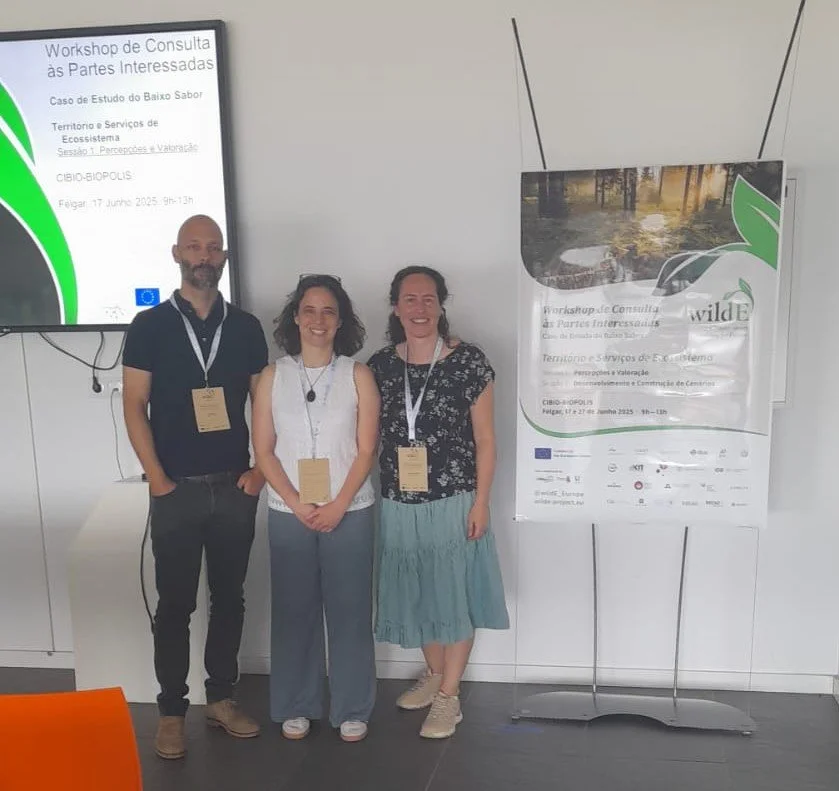
The wildE team from BIOPOLIS-CIBIO
Through the workshops, BIOPOLIS-CIBIO’s researchers were able to understand participants’ concerns and distinct priorities relating to land-use changes, ecosystem services, wildfire dynamics and key wildlife species. They produced both individual and collective visions for the region’s landscape for the next 20–30 years, along with a set of co-created scenarios.
Participants were able to reflect on current and future dynamics of the region’s landscape. Through individual exercises and group discussions, as well as the use of participatory tools like Mentimeter and scenario-building exercises, the workshops created an equitable space for participants to articulate their own perspectives and priorities. After exchanging ideas and insights and collectively exploring possible scenarios for sustainable land use management, the workshops helped participants to understand strategic the trade-offs, opportunities and shared responsibilities involved in shaping the region’s future.
What does this mean for the Baixo Sabor case study?
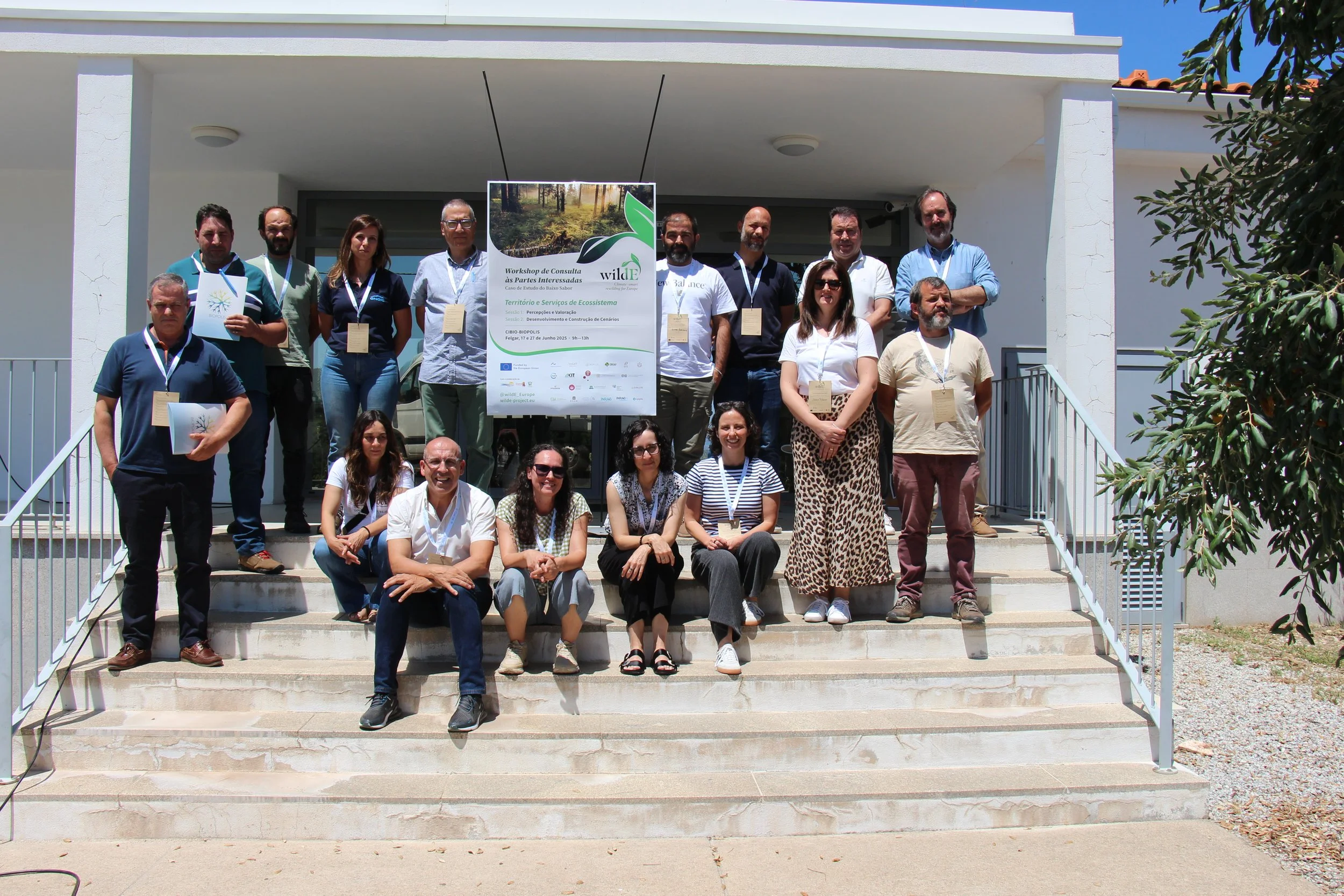
The outcomes of the workshops will be central to guiding the Baixo Sabor case study. The stakeholder perspectives and valuation gained from the first workshop ensures that the case study’s research aligns with local priorities and concerns. Furthermore, by using the scenarios developed in the second workshop, the team will be able to identify strategies for climate-smart rewilding that are socially acceptable, ecologically sustainable, and economically viable.
Going forward, these outcomes will be used to refine the case study’s analyses, strengthen stakeholder engagement, and support the co-design of climate-smart rewilding and sustainable land-use strategies for Baixo Sabor region.