
wildE’s seminal research on public attitudes towards rewilding

A large scale public opinion survey across 30 European countries (the 27 EU member states, the UK, Norway and Switzerland) has helped to identify public opinions around rewilding.
This exciting study, completed by researchers at Wageningen University, has opened up understanding about which aspects of rewilding people like or dislike and how this varies between countries. The results reveal a high demand for several rewilding actions across all of the countries, and also which actions are more contentious across the different countries. It also helps to reveal the large influence that a person’s beliefs around the outcomes of rewilding have on their attitude towards rewilding, and some patterns of attitudes amongst different societal groups. This information will be vital for informing and optimizing climate-smart rewilding within Europe.
Large-scale support for the principles of rewilding, but some country-differences in preferred ways to achieve them
This detailed work mapped out the national ‘average’ attitudes for three different ecological principles of rewilding, as well as some example actions which could bring these principles into reality. These principles were:
1. Reconnect – concerned with rewilding’s aim to reconnect disconnected ecosystems and landscapes, making it easier for wildlife to move through landscapes
2. Reduce – concerned with rewilding’s aim of reducing human control over nature, and allowing nature more autonomous control over itself
3. Restore – concerned with rewilding’s aim of restoring degraded ecosystems back to fully-functional and self-sustaining states

The research used an online questionnaire, collecting nationally representative samples from each of the 30 countries. Overall, the results show a lot of public support for the ecological principles of rewilding. The national ‘average’ attitude towards each of the three rewilding principles is positive across all of the 30 countries surveyed. The principles are supported both within landscapes near and dear to people and within their country, although there is a drop in the strength of that support when looking at people’s attitudes for the principles happening in a landscape near and dear to them, compared to their attitude for the principles happening somewhere undefined within their country.
There was greater variation in the attitudes for different rewilding actions. Some of the actions, such as creating wildlife crossings or corridors, or increasing natural grazing through free-roaming large herbivores, are supported by the majority of people in all of the countries surveyed. Other actions, such as reconnecting rivers with floodplains and allowing for natural flooding events to occur, are supported in some countries but not in others. This variation in support for different actions across different countries emphasises that there is no ‘one-size-fits-all’ approach to rewilding across Europe. Rather, there are country-specific preferences on how to conduct rewilding, and concerns around certain rewilding actions within certain countries. While the principles of rewilding are overall well-received in all of the countries surveyed, not all actions that could be taken to achieve those principles are as well-received.
The results also showed that actions which could be contrary to the rewilding principles are supported in some countries. Respondents were asked to express their feelings towards actions that could potentially hinder progress towards each of the rewilding principles, such as increasing the number of artificial dams in rivers, increasing the number of hiking trails, building more wind turbines or solar panels in natural areas, or removing deadwood from forests. These actions are also supported in many of the countries surveyed. Support for these actions indicates that rewilding in Europe needs to be balanced with other public concerns and demands, such as demands for public access to and recreation within natural areas, the production of renewable energy, and the management of wildfires.
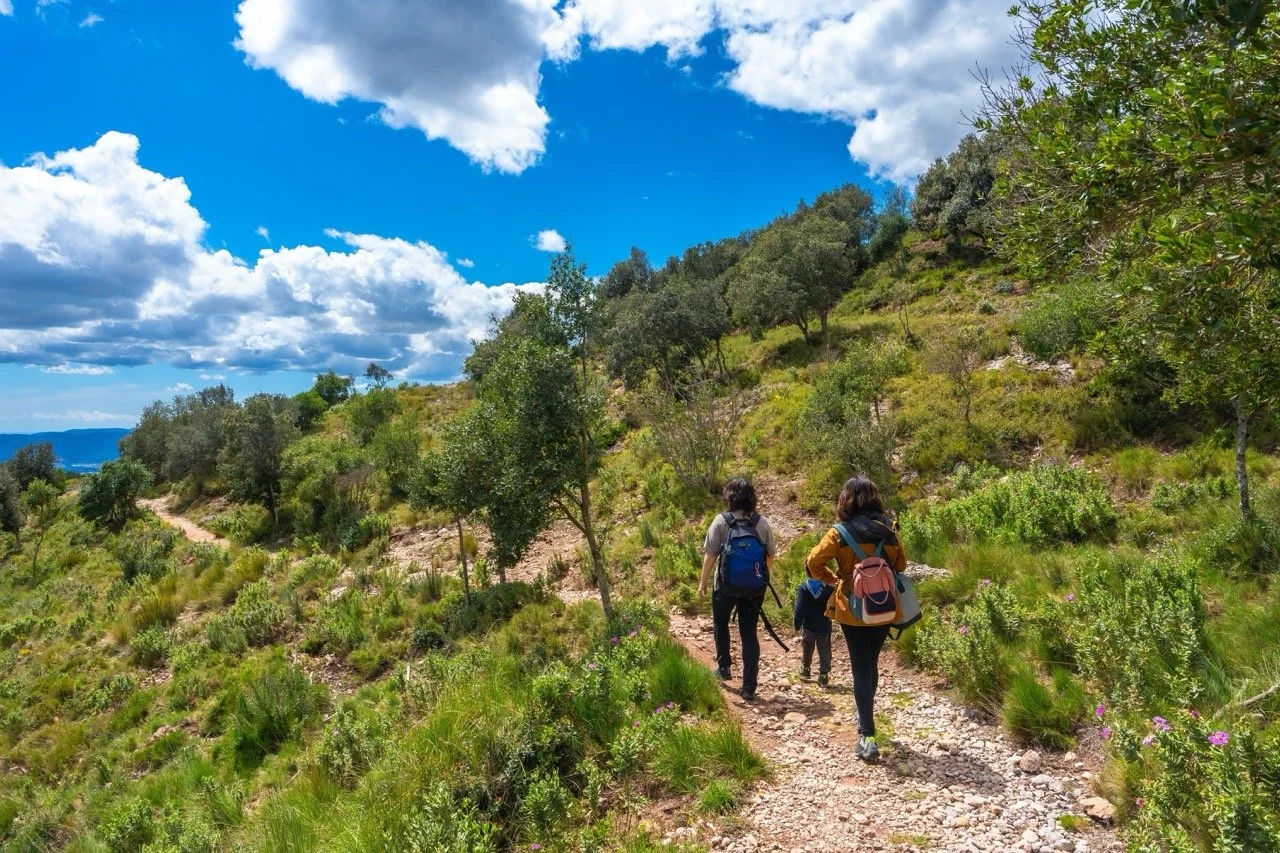
People’s attitudes towards rewilding are driven by their beliefs on what the outcomes will be
Further analysis was conducted to assess how people’s beliefs around the effects and outcomes of rewilding could influence their attitudes towards rewilding. For each of the rewilding principles, and also for a selection of rewilding actions, respondents were asked whether they felt that those principles and actions would have a beneficial or detrimental effect for a range of issues. These issues included topics such as nature conservation, combatting climate change, people’s safety and wellbeing within rewilding areas, and how enjoyable it would be to visit rewilding areas. These beliefs about the effects and outcomes of rewilding were found to be more strongly associated with differences in attitudes towards rewilding than differences amongst different social groups.
Next steps
Overall the results have provided an increased understanding of the European public’s hopes and fears around rewilding, and how these hopes and fears can influence attitudes towards rewilding. This information is vitally important to help guide rewilding in the future.
Whilst this data is still being analysed, it is already clear that the research opens up many new areas for consideration. How can rewilding accommodate for diverging attitudes and beliefs? Do people with different perspectives on what is of value within nature have different attitudes and preferences around rewilding? Finally, what is the role of education, peers, and the media in driving opinions? There is still a lot to learn!