
Interdisciplinary insights on climate-smart rewilding: Lessons from pioneering Dutch river transformations
Rewilding is a relatively young concept in Europe, and climate-smart rewilding is even newer. However, across Europe, some areas have already applied many of the principles underlying climate-smart rewilding for a long time. Gelderse Poort, one of the case studies in wildE, is one of these places.
Access the full article: https://link.springer.com/article/10.1007/s13280-026-02451-6.
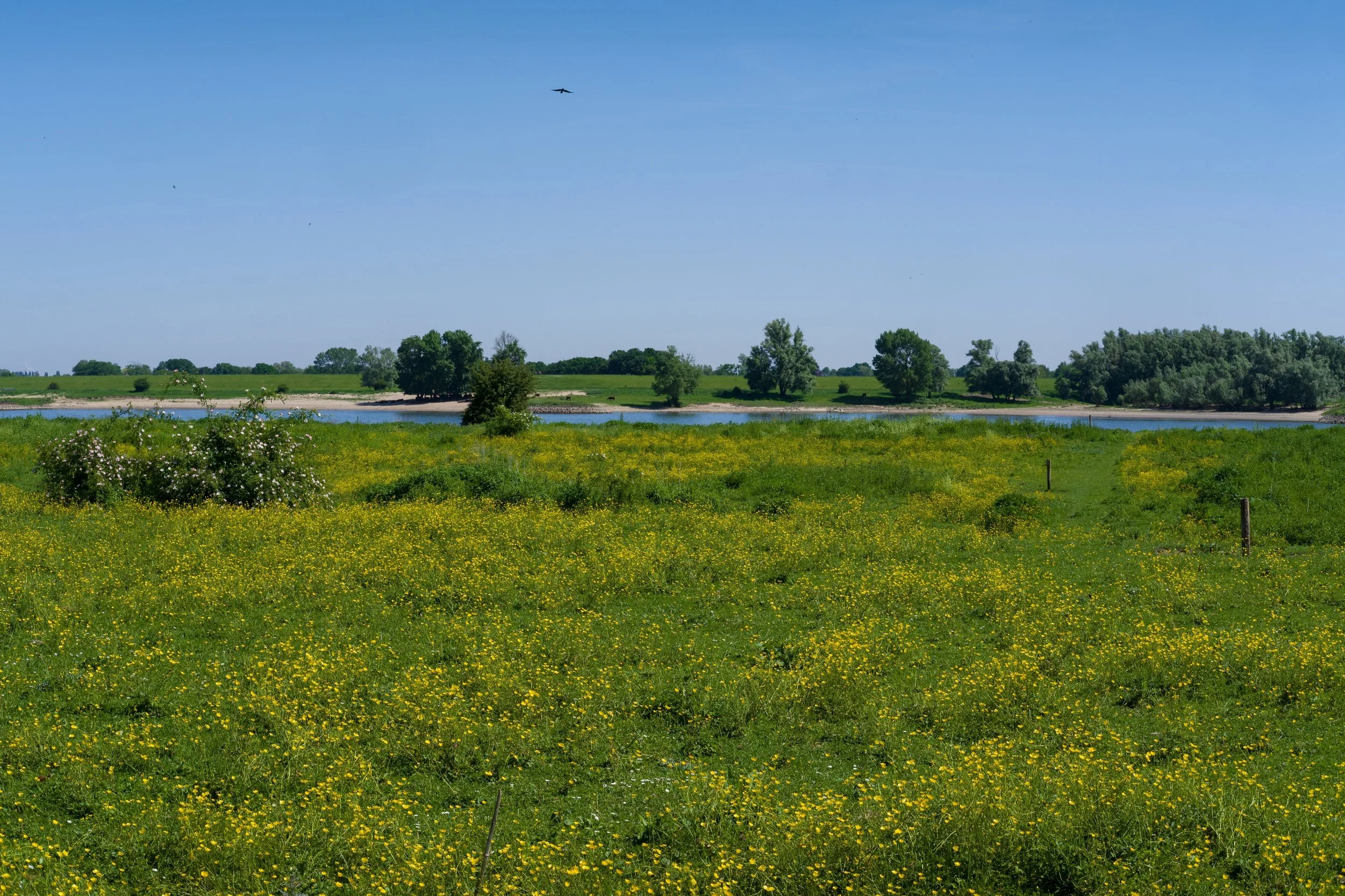
Gelderse Poort. Image courtesy: Ralph Rozema
This rewilding area, sandwiched between the city of Nijmegen and the Dutch/German border, began small in the 1990s and has been growing over the last few decades. As one of the older rewilding sites in Europe situated in a human-dominated landscape, it offers many lessons for climate-smart rewilding in Europe more broadly.
As part of wildE, academics from different disciplines have been working to understand this case, conducting field tests, talking with people involved in the development of the project, and reading a wide range of reports and articles. In this newly published article, we bring together these insights from the different disciplines to describe how climate-smart rewilding has led to transformative change in the Gelderse Poort area.
Gelderse Poort
First, we describe the history of this area. Gelderse Poort grew from a small 3-hectare plot in 1989 to over 5,500 hectares of new rewilding nature in this general area. At the site, rewilding and nature development has gone hand-in-hand with flood-risk reduction. As a riverine area, over time, the river has been allowed to take up more and more space in the landscape. Farming was relocated out of the floodplains, providing room for more natural river dynamics. In collaboration with sand and clay mining companies, floodplains were lowered, riverside gullies were created, and flooding regimes were brought back to the landscape.
This has led to a remarkable nature recovery, including the return of iconic species such as the white-tailed eagle. This has been assisted by the introduction of large herbivores such as Konik horses, who provide a dual function. They both maintain vegetation levels, necessary to ensure the floodplains can maintain their function as a buffer during high-water and create a heterogeneous landscape.
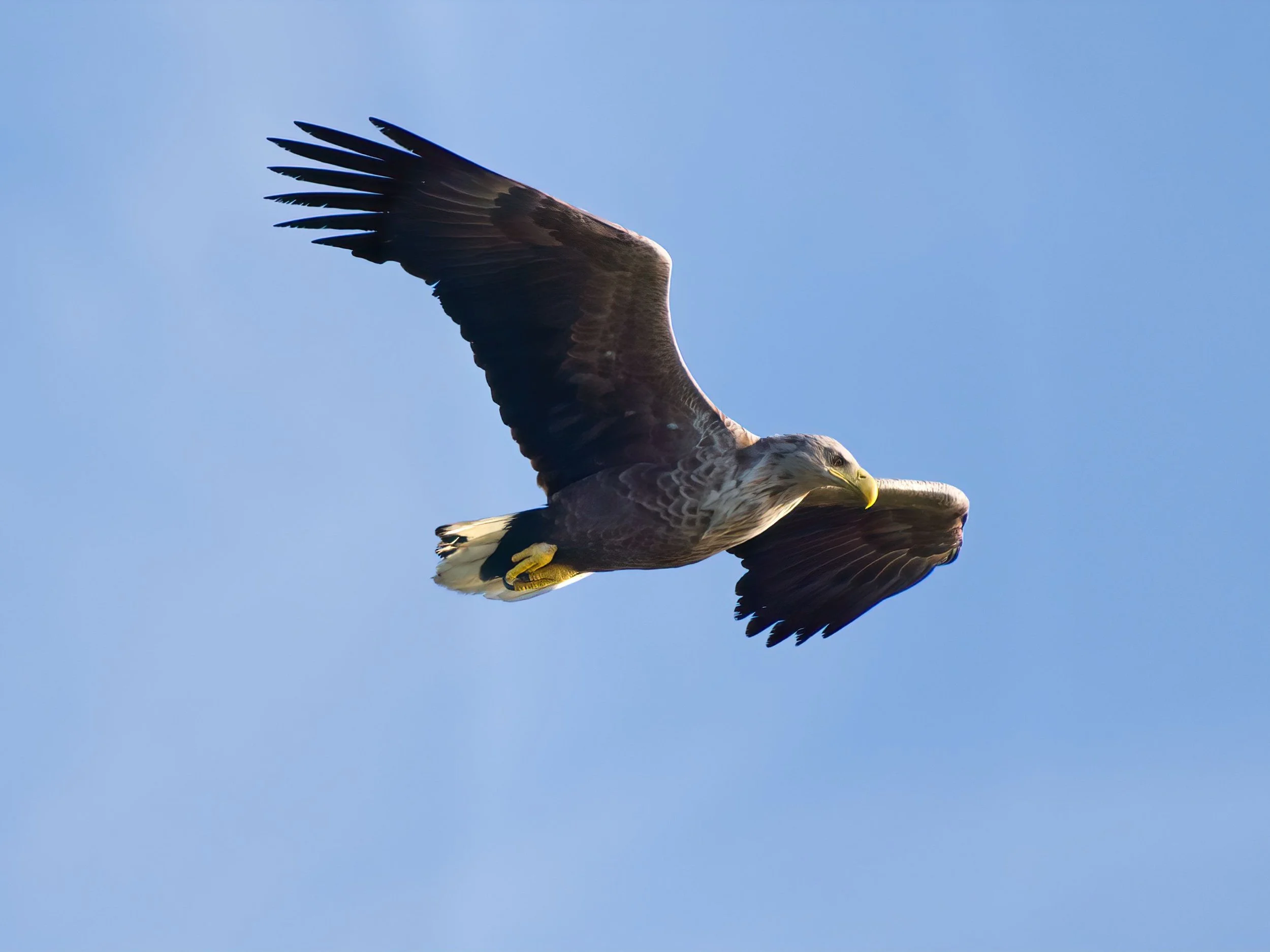
White-tailed eagle. Photo courtesy: Odd Rune Falch
The drivers of change
In our new paper, we identify a number of crucial factors in Gelderse Poort’s nature transformation, both supportive and constraining. We find that a crucial window of opportunity opened in the Netherlands in the 1990s, when major river floods led to the evacuation of many people from their homes. This event created public support for a rethinking of the paradigm in water management, away from traditional approaches focused on higher dikes and towards a nature-based approach. These events provided both the urgency to act and the willingness to accept difficult changes, such as the relocation of farming.
We also find that capitalising on such an opportunity requires a dedicated core group of thought leaders who are willing to take risks and experiment. In Gelderse Poort, a coordinated group of well-connected people who shared a similar vision were able to move rapidly at this moment of opportunity. Another factor supporting this transformation was that they involved local communities from the start and provided a high level of recreational access to the site. This increased local communities' sense of participation and ownership.
A key innovation supporting development in Gelderse Poort has been the funding model. Large-scale landscape changes require significant funding, and in this case, a perhaps unlikely partner was found in the form of clay and sand extraction companies. These companies maintain their social license to operate by working alongside rewilders, providing funding for land acquisition and carrying out the necessary preparatory work to transform the legacy landscape.
This legacy landscape, on the other hand, forms a key constraint in the development of Gelderse Poort, both ecologically and socially. Agriculture has left behind soils enriched with pesticides and fertilisers, potentially hindering the development of certain ecosystem processes. Transforming traditional agricultural landscapes and water management systems provoked concern among local communities, following centuries of land reclamation and the use of floodplains for farming.
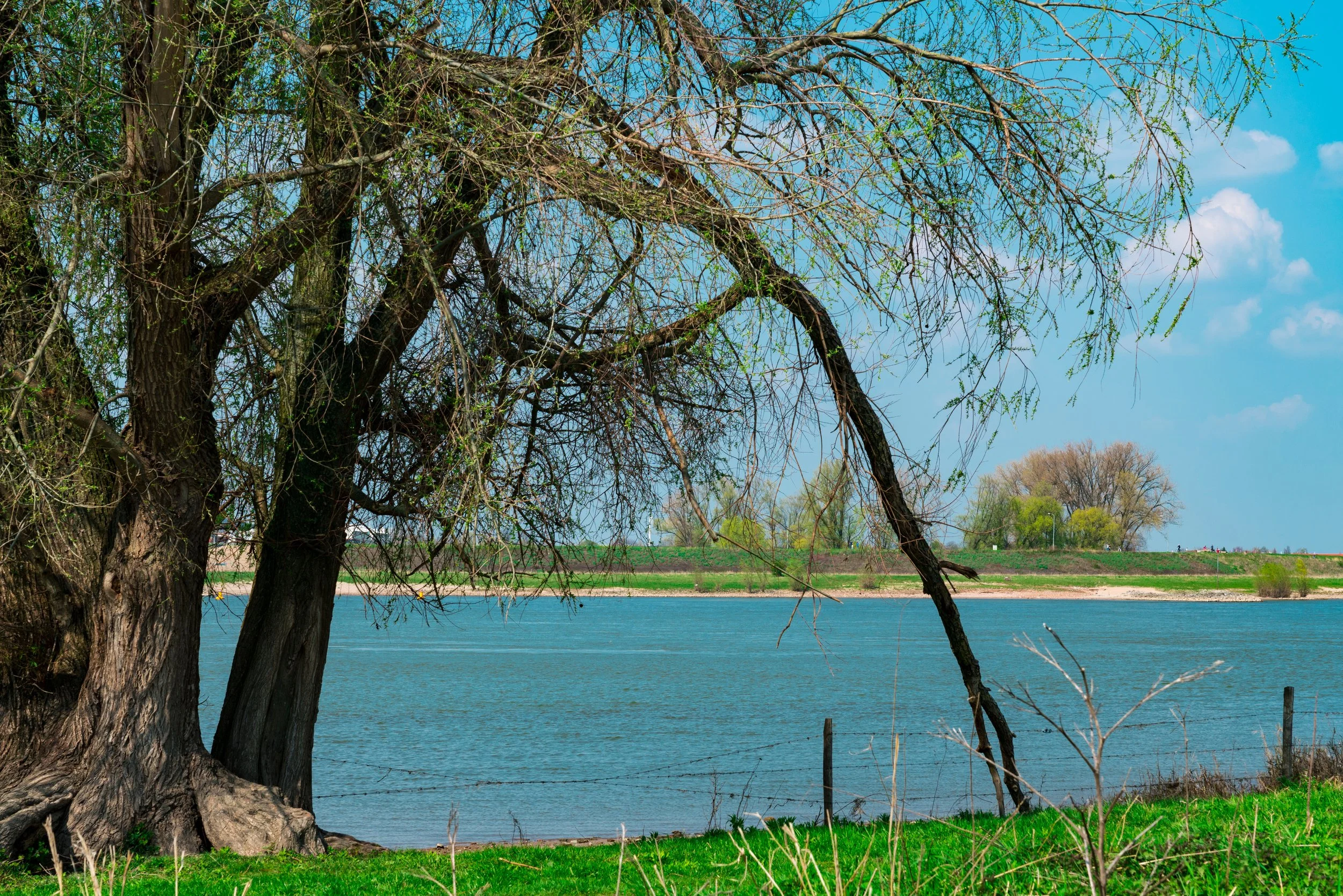
Nature park Gelderse Poort Stadswaard. Image courtesy: Poleijphoto
Building public support
Early (ecological) successes helped in overcoming some of this resistance. Reintroductions of charismatic species, such as Konik horses and Eurasian beaver caught the attention of the authorities and the public, contributing to the visibility of the project. However, partly due to regulations and limitations, the management of the semi-wild grazers remains resource-intensive and costly.
In general, public co-benefits have been a key driver to the development of Gelderse Poort. Flood protection, a growing concern under climate change, has attracted public and institutional support and funding. The Gelderse Poort has become an important recreational site for neighbouring urban centres, given its proximity to expanding cities such as Nijmegen and Arnhem. This recreational visitation of the site has enabled strong support for rewilding and business opportunities to local farmers and other entrepreneurs.
The location and size of the Gelderse Poort also played a key role in its development, affecting it both positively and negatively. The rapid ecological development was facilitated by the connectedness to the river. However, the limited size, linear riverine structure and surrounding landscape constrain the connectivity of the rewilded area to other ecosystems, such as terrestrial broadleaved forests separated by arable fields, as well as its ecological processes and functions.
Overall, in the Gelderse Poort, shifting the paradigm to rewilding as a climate-smart solution to societal challenges led to radically different scenarios, where nature recovery, climate change adaptation and mitigation complement each other. This has been achieved in a human-dominated landscape, showing that such change is also or maybe even particularly, possible in unexpected places.
If you want to learn more about this area in detail, read the full article open access at https://link.springer.com/article/10.1007/s13280-026-02451-6.
Written by Tim de Kruiff, Post-doctoral researcher, University of Copenhagen